Friday, March 11, 2016

Deviants is now on sale

Many of my readers have waited patiently to read Deviants, a short suspense novel that I expected to appear in print during 2014 or 2015. The publisher who contracted for Deviant’s hardcover, paperback, e-book, and audio rights sold their imprints to another publisher in 2015. During the transition, certain agreements of the original contract became null and void, and I asked the new publisher to return all rights to me. Although that new publishing company offered me a new contract with a tentative publication date in 2016, I declined.
When Crossroad Press, the publisher who has done such an amazing job promoting my Instruments of Death series, asked to let them know if the e-book rights for Deviants ever became available, I agreed to let them know. Although Deviants is a stand-alone novel, it does share certain similarities with the Instruments of Death novels. Crossroad Press’s Gordian Knot imprint is probably the ideal place for Deviants.

I am happy to announce the e-book publication of Deviants. It’s now available for Kindle and Nook. Here’s a sample:

Augie, by default, fit right in. He didn’t belong in normal society. He didn’t want what most people wanted. He had no use for a big house with a monthly mortgage to pay, no job with which to pay a mortgage even if he did want a house, no desire for a wife and children. He didn’t want a fancy new car every couple of years. What Augie wanted, ordinary society refused to provide, rejected as dangerous, and sought to stifle because the very idea was repulsive.

Augie wanted to watch people die as he slowly and systematically dismembered them. He wanted to smell the coppery-rich scent of fresh blood, feel the slimy, slippery parts of the human body grow cold beneath his deliberate touch. In a sense, he wanted to play God, for he had been told that only God could give life or take it away.

Deviants is part psychological horror, part crime-suspense. It’s lots of fun.

Order from http://www.amazon.com/Deviants-Paul-Dale-Anderson-ebook/dp/B01CTTXZNS


Tuesday, March 1, 2016

Is horror dead?

I have been here before. The eerie feeling of deja-vu is all encompassing.
I rode the horror bandwagon during the 1980s mass-market boom. Although I also crafted mysteries and westerns and contemporary romances and erotica and science fiction, I became known as a horror writer because my stories appeared in The Horror Show, The Arkham Sampler, Deathrealm, Masques III, and many other horror-themed anthologies and magazines. I also helped found the Horror Writers of America, now known as Horror Writers Association (HWA), which branded me as a horror writer.

I didn’t switch to horror, as some writers did, because it was the “in” thing. I wrote psychological horror and suspense because that was the kind of story I loved to read. Obviously, enough other readers loved horror to support an entire industry devoted to horror fiction. I suspect Stephen King’s success had a lot to do with horror’s popularity. Horror’s popularity began to wane when America launched Operation Desert Storm and real-life horrors were televised 24/7 by CNN and Fox.

When I returned to fiction writing in 2012, horror was undergoing a renaissance. New publishers had sprung up to take advantage of on-demand publishing and e-books. When I attended the 2014 World Horror Convention in Portland, I was introduced to Don D’Auria and Samhain Publishing. I pitched Don and he liked my story ideas (so did other editors who snatched up my novels first). When Don asked me to whittle my manuscripts down from 140,000 words to under 90,000 words, I knew Samhain wasn’t right for me. Don and I met again and talked at the Atlanta WHC in 2015. I was devastated to learn Don lost his job as editor of Samhain’s horror line near the end of 2015. Don, like David G. Hartwell, was one of the good-guys who knew and loved the genre as much as I did.

I am additionally devastated to learn today that Samhain plans to give up the ghost entirely. Samhain announced they will cease publication later this year due to declining sales.

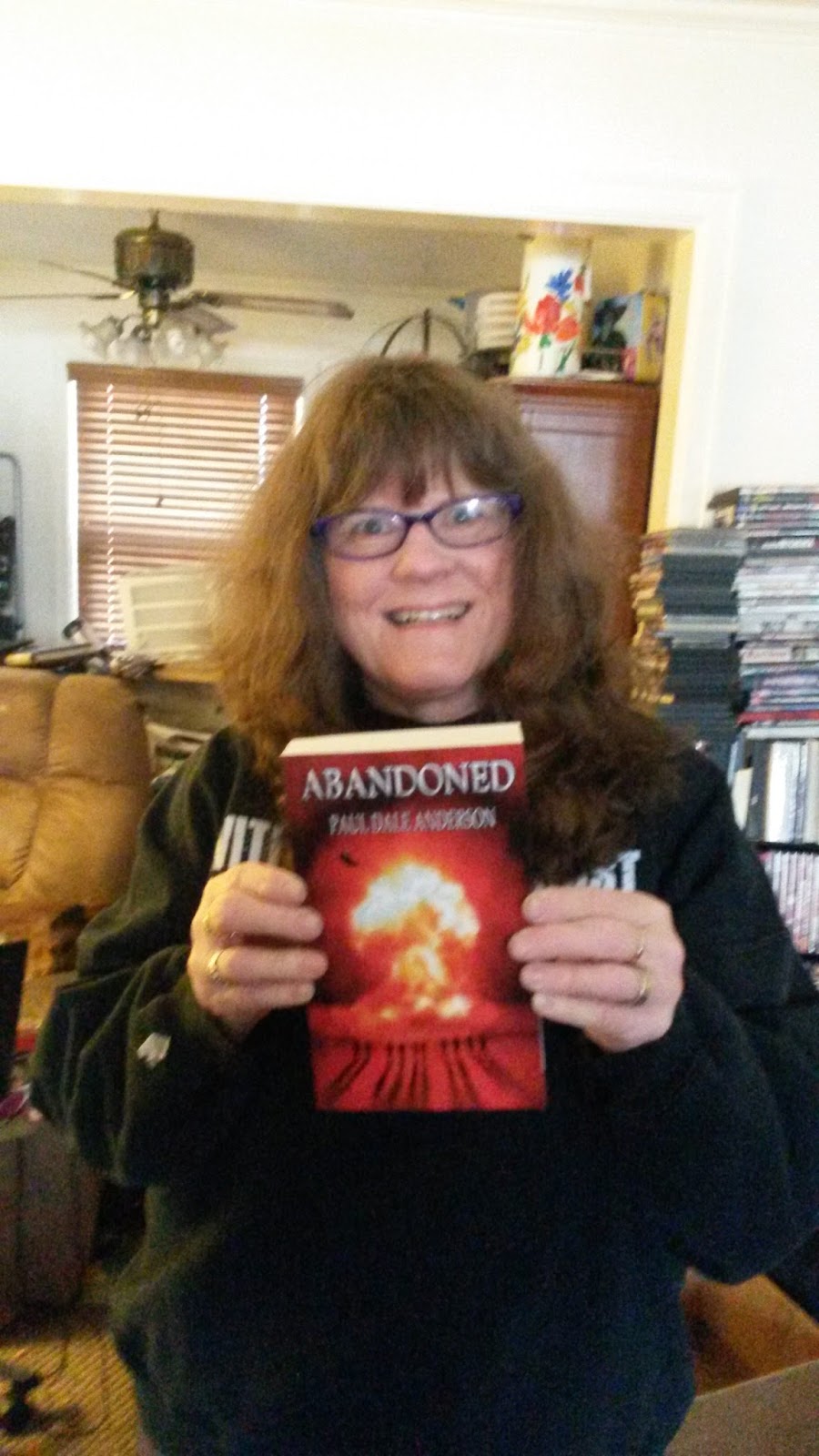
Two of the other horror publishers who had licensed my novels in 2014 also went out of business recently. Eldritch Press published Abandoned in trade paper and e-book last March, and Eldritch shut down at the end of 2015 after publishing multiple Stoker Award nominees. Damnation Books, which contracted for Deviants in 2014, sold out to someone else who promised to publish my title but who has not remained in contact. Their new website is currently “under construction”. I suspect they won’t publish the novel before the contract expires.

Something similar happened to me in the 1990s when I sold several novels and dozens of short stories that never saw publication. Horror publishers bit the dust faster than Billy Clanton and the McLaury brothers at the OK Corral, and it’s happening again.

Why is it happening now? I blame Donald Trump.

If you look at social media, you’ll notice how Trump dominates the posts, including posts by horror authors and readers. Trump has become a real-life horror that holds the attention of horror writers and readers the way the First Gulf War did, the same way Joseph McCarthy did in the 1950s and WWII did in the 1940s, when horror fiction also died from neglect.

Fear activates the fight or flight response in human beings just as it does in all animals. The human mind can only handle so much fear at a time before it seeks to escape from all fears real or imagined.

Not only has the fiction field been saturated by too much horror, so has real life.

What readers need and want now is a hero who will fight our fears for us. Like Generals Norman Swartzkopf and Colin Powell during the First Gulf War or Patton during WWII or Eisenhower and Edward R. Murrow during the McCarthy era. Mark my words, such a hero will emerge.

This is a recurring cycle, folks. It’s happened before, and it will happen again.

Horror never dies. It goes away for a while, and then it comes back.

Fortunately, I don’t depend on horror alone for my livelihood. I also write suspense thrillers with supernatural heroes and crime-suspense novels with detective heroes. I’m perfectly positioned for the superhero boom.

Writers who follow marketplace trends often find themselves a day late and a dollar short. The secret to surviving in this business is to write from the heart. Write what you want when you want, and to hell with current markets.

And, remember. Horror can never die. It returns from the grave with a vengeance.


Sunday, February 28, 2016

Review of The God's Eye View by Barry Eisler

The God’s Eye View by Barry Eisler (Thomas and Mercer, 2016) is a mile-a-minute thriller, a paranoid’s nightmare, the kind of novel I love to read and write. And Marvin Manus is my kind of contract killer. He’s cold, detached, and efficient. What makes him unique is his deafness. Physically abused as a child by his drunken father, Manus lost his hearing. Manus kills his father after the father kills Marvin’s mother, and the boy is institutionalized where he’s sexually abused by other inmates. Marvin learns to survive by being smarter and quicker and more ruthless than everyone else. Plus, Marvin always gets his revenge.
NSA director General Ted Anders rescues Manus from life behind bars by recruiting Manus for clandestine wet work. Manus trains with the Marines at Quantico and with the CIA at the Farm. When Director Anders needs someone to plug a leak, he assigns the work either to Manus or to Delgado, a sadistic assassin.

Evie Gallagher, an NSA programmer-analyst with a deaf son named Dash and an aging father hospitalized with Alzheimer’s, suspects Director Anders is murdering whistleblowers—NSA employees who, like Edward Snowden, divulge Anders’ illegal activities to the press. Unfortunately, Anders suspects Evie suspects, and he assigns Manus to shadow Evie and report suspicious activity. Because Evie uses American Sign Language to communicate with her deaf son, Manus feels a kinship with the woman and boy. He allows himself to fall in love with Evie.

When the Director sends Manus and Delgado to kidnap Evie and acquire an encrypted thumb drive in Evie’s possession, Manus won’t allow Delgado to hurt Evie. Despite what Delgado says, Manus refuses to believe the Director can be so cruel and uncaring. Manus hopes, all the way to the end, that if he talks Evie into turning the thumb drive over to the Director, all will be forgiven.

Filled with facts from today’s headlines, The God’s Eye View is a taut tale so well told that it made me buy all of Eisler’s previous books. My cudos to the author and five stars for a wonderful read.

Monday, February 15, 2016

On Visions and Voices


The hardest writing secret for me to learn—-probably the most important secret any writer can ever learn—-is to write only for yourself. You are your ideal reader, and the only person you need please is yourself.

I’m my own harshest critic. I obsess over every word. I’m a perfectionist at heart, and nothing is ever as good as my image of the way it should be.

That does not mean I don’t appreciate other perspectives. I do. I always appreciate advice and criticism from editors, agents, readers, and other writers.

But I don’t write to please others. I write only to tell the stories the way I envision them told. Sometimes I hear the words. Sometimes I see the words written down. Sometimes I feel the words or smell them or taste them.

Words are magical to me. Words enchant me and entrance me. I am under their spell.

Because I write in several genres, I’m not as well known as a horror writer, a suspense writer, a thriller writer, a science fiction and fantasy writer, or a mystery writer as I probably would be if I concentrated on one style and one genre only and published everything under one byline. I was raised in the great pulp tradition when writers had to write in many different genres and styles and under a variety of bylines just to earn a meager living. I wasted years studying mass-market trends and writing to guidelines established by editors or suggestions made by agents who supposedly knew the markets better than I.

By the time my stories or proposals crossed an editor’s desk, my themes were ofttimes out of vogue or the editor had moved on and the new editor wanted something different or the publication was no longer accepting unsolicited submissions. More than half of what I wrote never saw print.

When I returned to fiction writing in 2012 after an absence of nearly twenty years, I wrote only what I wanted to write without understanding how markets had changed in the interim. That proved to my advantage. Like many science fiction writers, I was either far ahead of my times or far behind my times. With a little bit of revision, several of my old novels and trunk stories became marketable as new 21st Century e-books because the truths I told then are particularly relevant to readers today. I am in the process now of dusting those stories and novels off, cleaning them up, modernizing them, and publishing them on Amazon.

Since I no longer write to spec, I am free to write what I want when I want and how I want. I write formula fiction because it’s what I know and love to read. But I cross genrelines with impunity, and I even toss in a few mainstream literary devices when I feel like it.

I’ll never be totally pleased with my writing, although I am certainly pleased with the progress I’m making as a writer. I’m pleasantly surprised when readers tell me they appreciate what I did in their favorite short story of mine or in a novel. It’s not like the old days when fans would often come up to me at cons and quote verbatim what they found especially memorable in one of my stories. These days, fans demand to know more about my characters and what will happen to so-and-so next because today’s fans don’t pay particular attention to the exact words I use to make my characters and their harrowing life-situations come alive, but they really do care about individual characters and what happens to each of them in their fictional worlds. I suppose that’s progress. It certainly makes selling sequels much easier. I like most of my characters, and I want to know more about them, too.

I shouldn’t be surprised that some readers appreciate my psychological horror (slasher) novels while other readers like my supernatural (paranormal) fantasies more. Still others prefer my police procedurals or my military thrillers. I realize it’s impossible to appeal to every reader out there. I must admit I was a bit surprised when a writer I admire told me he found Winds more fascinating than Light. Some of the settings and characters are literally the same in both novels. I should probably give up trying to second-guess readers. I find all of my novels fascinating, and that’s why I wrote them.

There are times I wish someone else would write my novels so I wouldn’t have to.

You know how this whole writing thing works, don’t you? You see a story idea and it grabs hold of you and simply won’t let you go. It’s a story that MUST be told. You do research, look around everywhere, for the same story already in print. When you can’t find it, you have to write it yourself to learn how the characters grow and develop and to discover how the story ends. Each of my novels—whether a standalone or part of a series—is a story I desperately wanted to read exactly the way it’s written. I hope you’ll want to read it, too. But if you don’t, that’s okay. I didn’t write it for you. I wrote it for me.

I know this goes against all of the conventional wisdom and everything I’ve learned in numerous writing classes and in books on the craft. I’m supposed to call you “Dear Reader” and pretend it’s all for you and I seek your approval with my writing. That’s a goddamned lie.

I write for me, and for me alone. I am willing to share my writing for a price.

If you’re a professional writer, you already know the secret: what makes your work valuable is your unique vision—your insights and intuitions—and the way you show us (reveal) your world through characterization, dialogue (literally, “through everyday words”), subtext, and metaphors. Readers are willing to pay you to share your visions if your visions are significantly different, sufficiently unique, and superbly well-written. Your writing doesn’t need to be perfect, just good. A competent craftsperson with a unique vision is often more worthy of reading than a literary perfectionist who has nothing new to reveal. That has been true for sf and fantasy visionaries for centuries, and it’s still true today.

Some writers, like Stephen King, have a unique voice. They possess an ear for words, and readers hear that voice whispering in their inner ears like their own self-talk. I admire that greatly. Like a teen-aged boy entering puberty, I’m still developing my mature voice.

As a mid-list author at the mid-point in his career, I have a clear vision of what I want to write next. Now I need to combine vision with voice to tell my unique stories the way they deserve to be told. I’m working on that.

Yes, Elizabeth, I’m still working on that. I guess I always will be until I get it right.


Monday, February 8, 2016

What Are Friends For?

My Best Friend’s Exorcism by Grady Hendrix (Quirk Books, May 2016) pits poor Abby Rivers against the devil in a fast-paced nostalgic thriller that seems slow-going at first but develops into something extraordinary. Abby and Gretchen become best friends in grade school, and their friendship endures into high school. They attend Albemarle Academy in Charleston, an expensive girl’s prep school. Gretchen and Margaret and Glee have wealthy parents, but Abby’s father lost his job and they relocate into the worst part of town. Still, Abby’s friendship with the other three continues as they explore womanhood and dropping acid and teenaged rebellions and skinny-dipping in the woods. It’s the acid and the skinny-dipping in the woods that does them in.
Everything unravels after that. Their neat little world falls apart when Gretchen gets sick, acts weird, and isn’t herself. Abby misinterprets everything. She makes herself the school pariah, alienates Gretchen’s parents and the school principal, and finally rejects Gretchen when Gretchen most needs Abby’s help.

Adults live in their own fantasy world. Adults are unable or unwilling to view the world the way a child or a teen does. Abby learns this lesson the hard way when every adult she turns to for help refuses to believe her. All adults, that is, except for musclebound Brother Lemon, the bodybuilder and wannabe exorcist.

This novel so perfectly captures teenage angst during the 1980s and 1990s that the characters come alive and the tension between them becomes palpable. The songs, the cars, the teen magazines, the descriptions of Charleston and its people and environs where Good Dog Max rummages in the trash all blend seamlessly together to invoke vivid images of a bygone time and place. Nothing lives forever but the memories of what once was. It’s the good memories that save us.

Thanks for the memories, Grady Hendrix. I’ll remember My Best Friend’s Exorcism forever.


Sunday, January 31, 2016

On Life and Love

Gretta M. Anderson, my wife and constant companion of nearly thirty years, died four years ago today.
Gretta and I were (and still are) soul mates. We shared a love of science fiction and fantasy that bordered on fan-atical. We went to conventions together, read literally every story and novel published in the sf, fantasy, and horror genres between 1979 and 1995, and read thousands of manuscripts for 2AM Magazine. Gretta was the editor and publisher of 2AM, and I was Irwin Chapman, 2AM’s book reviewer and editorial assistant. We were extremely happy. I wrote stories and novels of my own and many were published by mainstream publishers.

Then Gretta’s father and mother became ill and shortly thereafter Gretta’s mother died.

Gretta never completely recovered from a fall off a cliff while hiking and rock climbing as a teenager. She broke her back in multiple places. Although she underwent extensive surgery, she remained partially paralyzed and had to learn how to walk all over again.

After the multiple-year illness and eventual death of her mother, Gretta’s own health began to decline. I, too, developed a life-threatening illness in the mid-1990s. Gretta and I reluctantly left science fiction and fantasy to search for cures. We both went back to college and did extensive research. We shared much of what we learned by opening the enTrance Center and teaching regular classes.

With one foot in traditional medicine and the other in alternative treatments, we explored wellness. We helped many clients to heal, and our students continue that healing work today.

On January 31, 2012, Gretta died of a massive heart attack. I discovered her body when I awoke that morning.

I am angry that Gretta left me. I express that anger in some of my writing. I closed the enTrance Center a year after Gretta died, and I returned to reading and writing sf, fantasy, and horror. I imagine Gretta visits me in spirit as I craft new tales.

This year I revived 2AM Publications in Gretta’s honor.

During the course of one’s life, if one is lucky, one may learn to love many people and many things. I love my daughter, Tammy, and I love my three feline companions. I love the books and magazines that line the walls of my house. And I love the house itself.

I love Elizabeth Flygare differently than I love Gretta. Elizabeth is more traditional and literary mainstream than Gretta. Elizabeth complements my life in new ways.

Dare I say that I also love Teddie, my first wife and Tammy’s mother? Dare I say I love Susan, my second wife? Love never dies, and it IS possible to love more than one person. But love and relationships change over time, and though love continues, life forces us to move on.

I’ve made my share of mistakes in this life, but allowing myself to love is not one of them.

I love you, Gretta. I have always loved you, and I always will.


Saturday, January 30, 2016

#MastersOfHorror: Interview with Mort Castle By David Kempf

#MastersOfHorror: Interview with Mort Castle By David Kempf: Mort Castle Born 1946 (age 68–69) Novelist, short story writer, comic book writer www.mortwrites.freeservers.com Mort Castle (born 19...